
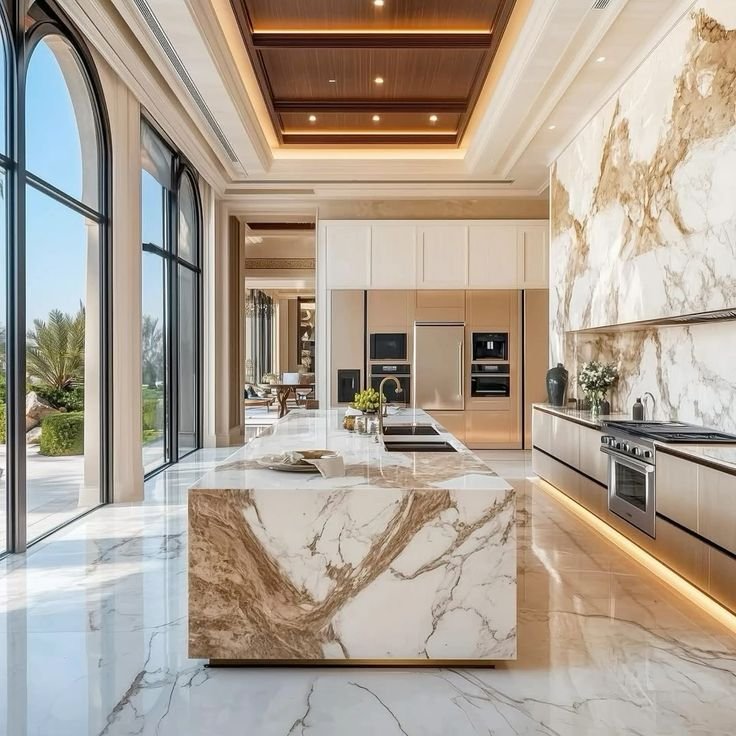
A luxury apartment kitchen uses a waterfall island. The top surface looks like elegant Calacatta marble, but the side edge looks flat and disconnected. A hotel reception desk has a thick mitred profile, yet the corner reveals that the pattern exists only on the surface. A retail counter appears premium from a distance, but close-up inspection exposes a plain side edge. This is the hidden problem many designers call the edge aesthetic issue.
In contemporary interiors, edges are no longer hidden. Waterfall islands, floating vanities, thick reception counters, wall returns, stair treads, and commercial display surfaces all expose the slab side. That is why 3D Print Quartz is becoming important for modern surface design. Buyers who need reliable marble-look surfaces can start by reviewing professional quartz slabs for contemporary interiors to understand the broader material options available for residential and commercial projects.

What Is 3D Print Quartz?
3D Print Quartz Explained for Project Buyers
3D Print Quartz is an engineered quartz surface that uses advanced patterning or printing technology to create stronger visual depth, more natural vein movement, and a more stone-like appearance than basic quartz designs. It is commonly used for kitchen countertops, bathroom vanities, reception desks, feature walls, retail counters, hotel interiors, luxury apartments, and commercial surfaces where both design and maintenance matter.
Depending on the manufacturing method, the pattern may be surface printed, layered, full body, or engineered with deeper visual continuity through the slab structure. This distinction matters. A product called “3D” may look excellent on the face, but buyers still need to inspect the edge. The word 3D should not be treated as magic powder sprinkled on quartz. The actual slab structure decides whether the edge performs well.
3D Print Quartz vs. Regular Quartz
Regular quartz is durable, practical, and widely used, but its visual pattern can be flatter. Traditional surface-printed quartz may look convincing on the top face, yet exposed edges may reveal a plain or inconsistent side. 3D Print Quartz improves visual movement, giving the surface more depth and a more convincing marble-like effect.
For premium applications, buyers often compare standard quartz with full body 3D printed quartz, especially when the project includes waterfall edges, thick profiles, visible side returns, or close-up commercial inspection. If the project only uses flat wall panels with hidden edges, basic quartz may still work. If the project exposes edges everywhere, full body structure becomes much more valuable.
| Quartz Type | Pattern Depth | Edge Appearance | Best Application | Buyer Recommendation |
|---|---|---|---|---|
| Plain quartz | Low | Consistent but simple | Utility counters and simple interiors | Choose when visual drama is not required. |
| Surface printed quartz | Surface-level | May look disconnected on exposed edges | Flat panels and hidden-edge areas | Use when edge exposure is limited. |
| 3D Print Quartz | Medium to high | Better visual depth and realism | Countertops, vanities, commercial counters | Choose for premium close-up surfaces. |
| Full body 3D printed quartz | High | Stronger edge continuity | Waterfall islands, stairs, thick edges, luxury counters | Choose when edges are visually important. |
What Is the Edge Aesthetic Problem?
Why Edges Matter in Contemporary Design
Minimalist and contemporary interiors make edges more visible. In older designs, many slab edges were hidden by cabinets, trims, frames, or small profiles. Today, designers use waterfall islands, floating vanities, thick mitred counters, monolithic reception desks, stair nosings, wall returns, and open display counters. The edge is now part of the design language.
This creates a simple but serious problem. A material may look premium on the top surface but fail at the side. The closer people stand to the counter, the easier it is to notice whether the edge feels natural, continuous, and solid. Luxury projects are judged by the detail that nobody talks about until it goes wrong. Edges are exactly that detail.
How Surface Printed Materials Can Fail at the Edge
Surface printed quartz can be attractive and cost-effective, but its limitation appears when the slab side is visible. The printed surface may show beautiful veining, while the edge reveals a plain body color. Mitred fabrication can reduce this issue, but it requires skilled cutting, bonding, vein alignment, and polishing. If the side strip does not match the top pattern, the edge still looks artificial.
This is especially obvious on waterfall islands, thick countertops, reception desks, bathroom vanities, and stair treads. In these applications, people see the top and side together. When the pattern stops abruptly, the material loses its natural-stone illusion.
Why Buyers Often Notice the Problem Too Late
Many buyers approve quartz from small samples or digital photos. Small samples usually show the top surface, not the edge. Digital images rarely reveal side behavior. After fabrication, the mismatch becomes expensive to fix. Re-cutting, re-polishing, re-ordering, or replacing slabs can delay the whole project.
The correct process is simple: inspect cut edge samples before approving bulk orders. Buyers should ask for side photos, exposed-edge samples, mitred-edge examples, and full slab images. The top surface sells the dream, but the edge tells the truth.
How 3D Print Quartz Solves Edge Aesthetic Problems
Deeper Patterning and Visual Continuity
3D Print Quartz improves edge aesthetics by creating deeper visual movement and a stronger connection between the surface pattern and the slab body. In full body or deeper-structure products, the edge can look more consistent with the top surface, making the material feel more solid and premium.
The goal is not only to imitate marble on the surface. The goal is to make the whole visible object feel believable from the top, side, corner, and close-up view. That is why many designers now see 3D quartz as a stronger solution for contemporary interiors where edges are part of the visual experience.
Better Results for Mitred and Waterfall Edges
Waterfall islands are one of the strongest use cases for 3D Print Quartz. The side panel is fully visible, often from several angles. If the pattern looks disconnected, the island loses its monolithic effect. A well-selected 3D quartz slab helps fabricators create smoother visual transitions between the top and side surfaces.
For buyers planning a seamless island, this guide on seamless waterfall island with 3D full body slabs is especially relevant because waterfall design depends on slab layout, vein direction, edge planning, and fabrication accuracy. The material helps, but craftsmanship still decides whether the final result looks luxury or “almost there.”
Stronger Close-Up Realism in Commercial Interiors
Commercial interiors expose surfaces to close inspection. Guests stand in front of hotel reception desks. Customers touch retail display counters. Apartment buyers inspect kitchen islands. Restaurant guests lean on bar counters. In these moments, the edge is not a small technical detail. It is part of the user experience.
3D Print Quartz helps commercial surfaces look more realistic at close range because the side edge does not betray the surface as quickly. This improves perceived value, supports brand quality, and reduces the risk of design disappointment after installation.
| Edge Application | Common Problem with Surface Printing | How 3D Print Quartz Helps | Buyer Check |
|---|---|---|---|
| Waterfall island | Side panel looks disconnected from top | Improves vein depth and side continuity | Request slab layout and side sample. |
| Hotel reception desk | Edges look plain under close inspection | Creates stronger premium appearance | Inspect mitred profile examples. |
| Bathroom vanity | Side returns reveal body color mismatch | Improves close-up realism | Check edge and backsplash returns. |
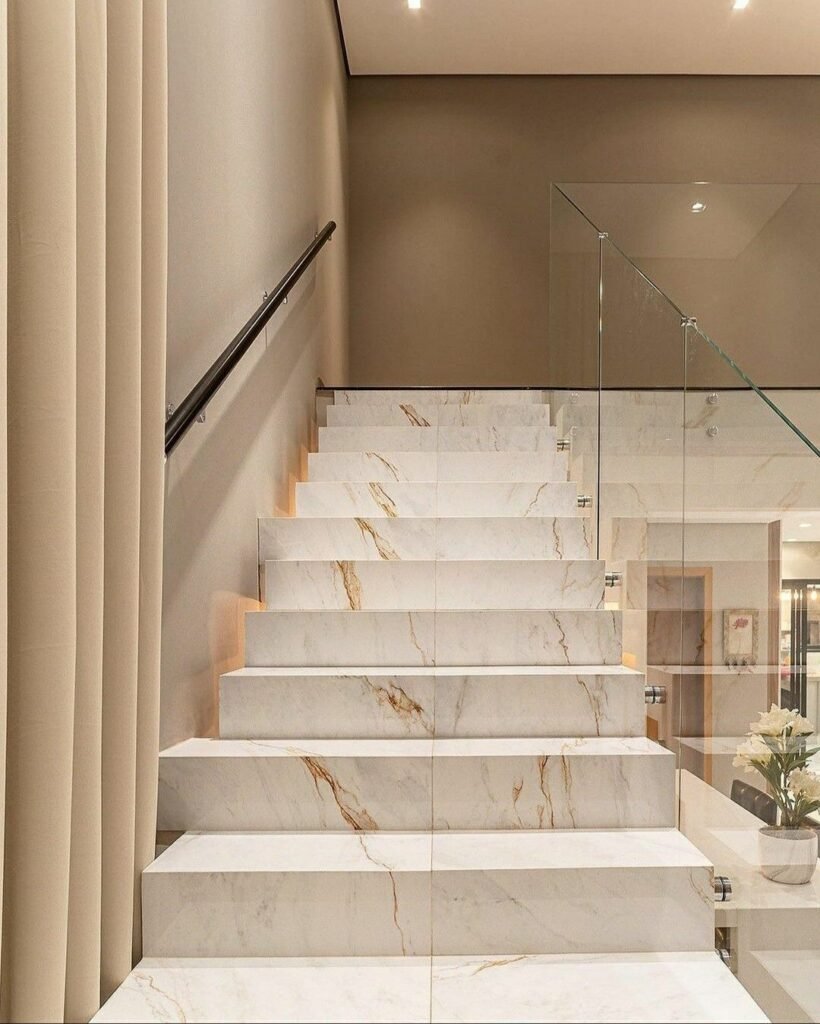
| Stair tread | Nosing exposes plain side surface | Supports more integrated edge appearance | Confirm thickness, finish, and edge profile. |
3D Print Quartz vs. Surface Printed Quartz
Surface Printing: Useful but Limited
Surface printed quartz should not be dismissed completely. It can work well for wall cladding, low-edge-exposure surfaces, simple vanity tops, and budget-sensitive projects. When edges are hidden or the design does not require deep material realism, surface printing may be enough.
The problem appears when buyers use surface-printed materials in applications that demand exposed-edge realism. In that case, the material is being asked to perform beyond its structure. That is where project complaints begin.
3D Print Quartz: Better for Visible Edges and Premium Surfaces
3D Print Quartz is stronger when the project requires depth, edge continuity, and natural-stone-like realism. It is suitable for high-end kitchens, hotel counters, commercial vanities, large islands, and design focal points. It can also reduce dependence on natural marble when buyers want a marble-like look with easier maintenance and better pattern control.
This is one reason modern hospitality projects are adopting engineered alternatives. For commercial buyers comparing marble and quartz surfaces, the article modern US hotels swapping natural marble for 3D Print Quartz explains why hotels increasingly value lower maintenance, stronger consistency, and controlled visual performance.
Full Body 3D Printed Quartz: When It Is Worth the Upgrade
Full body 3D printed quartz is worth considering when edge exposure is critical. Waterfall countertops, thick counters, stairs, retail display surfaces, and reception desks benefit from better pattern depth and side appearance. If edges are hidden, full body may not be necessary. If the project is high-end and close-up inspection matters, full body structure can justify the upgrade.
| Project Situation | Surface Printed Quartz Enough? | 3D Print Quartz Recommended? | Full Body Needed? | Decision Logic |
|---|---|---|---|---|
| Flat wall cladding | Often yes | Optional | Usually no | Edges are less visible. |
| Waterfall kitchen island | Risky | Yes | Often yes | Side continuity is essential. |
| Hotel reception desk | Not ideal | Yes | Recommended | Guests inspect edges closely. |
| Back-of-house counter | Yes | Usually no | No | Function matters more than premium edge appearance. |
Design Applications Where Edge Aesthetic Matters Most
Waterfall Kitchen Islands
Waterfall kitchen islands are the clearest example of why edge aesthetics matter. The side panel is highly visible, and the design depends on the illusion of one continuous stone volume. If the top looks like marble but the side does not, the island loses its visual power.
For waterfall islands, buyers should confirm vein direction, slab layout, mitred-edge skill, thickness, finish, and edge samples. A full-body or deeper-pattern 3D Print Quartz surface can significantly reduce visual mismatch.
Hotel Reception Desks and Commercial Counters
Hotel reception desks are viewed from close range every day. Guests see the front, side, top, corners, and edge profiles while checking in. A weak edge can make the whole counter feel less premium. 3D Print Quartz helps create a more integrated marble-look effect while offering easier maintenance than many natural stones.
Bathroom Vanities and Wall Returns
Bathroom vanities often expose side panels, backsplash returns, and cut edges around sinks. Standard printed surfaces may look convincing on the top but artificial at the sides. 3D Print Quartz improves close-up realism, especially in luxury apartments, hotel bathrooms, and premium residential interiors.
Stair Treads and Commercial Flooring Transitions
Stair nosings expose the slab side. Commercial transitions also reveal edges at level changes, landings, and trim areas. Buyers must confirm thickness, slip resistance, finish, structural support, and edge appearance. In these areas, aesthetics and safety must work together.
Retail Display Counters and Luxury Furniture Surfaces
Retail counters are viewed and touched by customers. In luxury retail, material authenticity affects perceived brand value. 3D Print Quartz can support premium store design by delivering visual depth, clean maintenance, and stronger edge realism.
Material Parameters Buyers Should Confirm
Thickness and Slab Size
Common thickness options may include 12mm, 15mm, 18mm, 20mm, and 30mm depending on supplier capability and application. Thick profiles can be achieved through solid slabs or laminated and mitred edges. Large slabs reduce seams but require careful packing, handling, and installation.
Buyers should match thickness with application. A waterfall island may require different planning from a wall panel. A reception desk may need edge strength and fabrication accuracy. A vanity may need moisture-friendly cleaning and stain resistance. The right slab is not just about color. It is about how the surface will be cut, joined, touched, cleaned, and inspected.
Pattern Depth and Body Structure
Buyers should ask whether the product is surface printed, layered, full body, or through-body. This is the most important question for edge aesthetics. Inspecting only the top surface is not enough. The side sample reveals whether the pattern continues visually through the slab body or stops at the surface.
A useful reference for understanding this material category is the definitive guide to 3D print full body quartz, which explains why slab structure, pattern depth, and modern surface applications should be considered before project specification.
Finish, Gloss, and Surface Texture
Polished finishes create stronger reflection and visual depth. Honed or matte finishes create a softer contemporary mood. Textured finishes may improve grip in some applications but require different cleaning. Finish changes how the pattern is perceived. A high-gloss Calacatta-look surface may look dramatic, while a matte surface may feel calmer and more architectural.
Stain Resistance, Water Absorption, and Maintenance
Quartz is often chosen because it is easier to maintain than natural marble. Buyers should still confirm stain resistance, water absorption, chemical resistance, cleaning guidance, and heat-use expectations. Commercial spaces need clear maintenance rules because cleaning teams may use strong chemicals or abrasive pads if they are not trained.
| Parameter | Why It Matters | Buyer Check | Risk if Ignored |
|---|---|---|---|
| Thickness | Affects strength, edge profile, and fabrication | Confirm slab thickness and support method | Weak edge or wrong profile planning |
| Pattern depth | Decides edge realism | Inspect cut edge samples | Disconnected edge appearance |
| Finish | Controls reflection and cleaning behavior | Approve polished, honed, or matte samples | Wrong design mood or maintenance issue |
| Color consistency | Important for multi-slab projects | Request batch photos and slab numbering | Visible mismatch after installation |
3D Print Quartz vs. Natural Marble, Porcelain, and Standard Quartz
3D Print Quartz vs. Natural Marble
Natural marble offers authentic veining, geological uniqueness, and emotional luxury. However, marble may require sealing, polishing, and more careful maintenance. It can also stain or etch from acidic substances. 3D Print Quartz offers marble-like appearance with better consistency and easier care.
If natural uniqueness is the priority, marble may win. If edge control, repeatability, and maintenance matter more, 3D Print Quartz may be the stronger project material. For buyers wanting rare marble aesthetics without the same supply and maintenance concerns, 3D printed quartz as an alternative to rare Calacatta marble explains why engineered surfaces are increasingly used in luxury interiors.
3D Print Quartz vs. Porcelain Slabs
Porcelain slabs offer large formats, strong surface performance, and many marble-look designs. They can be excellent for walls, floors, and heat-resistant applications. However, printed porcelain may also have edge limitations depending on body structure. Porcelain can also be harder to fabricate in certain thick-edge profiles.
3D Print Quartz may provide a more solid engineered stone feel for countertops, vanities, and reception desks. Porcelain may be stronger in some flooring or heat-focused applications. The correct choice depends on use, edge exposure, fabrication method, and maintenance expectations.
3D Print Quartz vs. Standard Quartz
Standard quartz is practical and often more economical. It may be enough for simple counters, rental apartments, utility areas, or projects with minimal edge exposure. 3D Print Quartz improves visual depth and premium appearance. It is better for exposed-edge designs, luxury surfaces, and commercial projects where close-up inspection matters.
| Material | Edge Aesthetic | Maintenance | Design Depth | Buyer Recommendation |
|---|---|---|---|---|
| 3D Print Quartz | Strong | Easy to moderate | High | Choose for premium counters and visible edges. |
| Full body 3D quartz | Very strong | Easy to moderate | Very high | Choose for waterfall islands and thick profiles. |
| Natural marble | Naturally excellent | Higher care | Authentic | Choose for natural uniqueness and luxury. |
| Standard quartz | Basic to medium | Easy | Medium | Choose for simple and cost-controlled surfaces. |
Fabrication Techniques for Better Edge Results
Mitred Edge Fabrication
Mitred edges create a thick profile by joining the top and side surfaces at an angled seam. When done well, they make the counter look like a solid stone block. When done poorly, they show gaps, mismatched veins, weak corners, or dull seams. 3D Print Quartz improves visual potential, but it cannot rescue careless fabrication.
Laminated Edges and Built-Up Profiles
Laminated edges create a thicker-looking profile by adding a side strip or built-up edge. This method needs careful pattern planning. If the side strip does not match the top surface, the edge may look artificial. Buyers should confirm whether the fabricator has experience with quartz edge profiles before approving the final design.
Edge Polishing and Final Inspection
Edges must be polished consistently with the top surface. Gloss mismatch can make the edge look dull. Corners, seams, and visible returns should be inspected under strong lighting. Edge protection is also important during packing and installation because chips or scratches on exposed edges are immediately visible after installation.
Industry Trends: Why Edge Realism Is Becoming More Important
Contemporary Minimalism Makes Details More Visible
Minimalist interiors use fewer decorative distractions. This makes material transitions, seams, edges, and corners more visible. A weak edge stands out quickly in a clean design. 3D Print Quartz supports minimalist luxury because the material detail can remain convincing even when the design is simple.
Waterfall Islands and Monolithic Surfaces Are Growing
Large islands, integrated counters, and monolithic surfaces are now common in luxury apartments, villas, hotels, and showrooms. These designs expose more slab sides. The more visible the side becomes, the more important full-body or deeper-pattern quartz becomes.
Designers Want Marble-Look Surfaces With Easier Maintenance
Marble-look surfaces remain popular, but many buyers want lower maintenance than natural marble. 3D Print Quartz answers this demand by offering stronger visual depth, better consistency, and easier daily care. It supports the look of luxury without asking the maintenance team to panic every time someone spills coffee.
Regulations, Safety, and Quality Documentation
Indoor Environmental and Material Documentation
Commercial projects may require low-VOC documents, material declarations, or environmental reports depending on region and project type. Engineered quartz suppliers should provide available documentation when green building compliance or public-space approval is required.
Food-Surface and Hygiene Considerations
Kitchen countertops, bar counters, and food-service surfaces need easy cleaning and appropriate hygiene performance. Buyers should confirm cleaning compatibility, stain resistance, and maintenance guidance. Unsupported claims should be avoided unless documentation is available.
Fabrication and Installation Safety
Quartz fabrication requires dust control and safe cutting procedures. Professional workshops should use wet cutting or dust extraction where required. Installation teams should handle large slabs carefully to prevent edge damage, cracking, or injury.
Common Mistakes When Buying 3D Print Quartz
Mistake 1: Approving Only the Top Surface
The edge may look plain or disconnected after fabrication. Buyers should ask for cut edge samples, side photos, and edge profile examples before bulk approval.
Mistake 2: Confusing Surface Printed with Full Body
Buyers may expect vein continuity that the material cannot provide. Confirm whether the slab is surface printed, layered, full body, or through-body.
Mistake 3: Ignoring Fabrication Method
Poor mitres, mismatched side strips, dull edges, and visible seams can ruin a premium material. Coordinate slab layout, cutting direction, edge profile, and fabricator skill.
Mistake 4: Choosing by Price Only
Low price may hide weak pattern depth, poor edge appearance, inconsistent color, limited inspection, or packaging risk. Evaluate full slab quality, edge samples, and supplier support.
Mistake 5: Forgetting Application Conditions
A wrong finish or thickness can create cleaning, wear, or installation problems. Choose finish and structure based on actual use, not only showroom appearance.
How to Choose a Reliable 3D Print Quartz Supplier
What a Professional Supplier Should Provide
A professional 3D Print Quartz supplier should provide physical samples, full slab photos, cut edge samples, thickness options, finish options, pattern depth explanation, full body or surface structure confirmation, fabrication guidance, edge profile examples, batch consistency support, slab layout support, packing photos, inspection reports, maintenance guidance, export documentation, project lead time, and after-sales communication.
Supplier capability matters because this product is technical as well as decorative. Buyers can review Miyastone 3D Print Quartz supplier capability when evaluating project communication, material options, quality control, and surface supply experience.
Manufacturer vs. Supplier vs. Wholesale Buyer Logic
If you need product development, choose a 3D Print Quartz manufacturer with technology control. If you need project sourcing, choose a supplier with full slab selection and edge sample support. If you need container-level supply, compare 3D Print Quartz wholesale options but verify consistency. If you are a designer, prioritize full slab appearance and edge realism. If you are a fabricator, prioritize cutting behavior, polish quality, and edge structure.
For project evaluation, buyers can contact Miyastone with application area, visible edge requirement, waterfall or standard edge design, slab size, thickness, finish preference, fabrication drawings, and project timeline. A clear brief helps the supplier recommend the correct 3D Print Quartz option instead of guessing. And guessing, naturally, is where good projects go to lose money.
Recommended Buyer Checklist Before Ordering
| Checklist Item | Why It Matters | Buyer Action |
|---|---|---|
| Visible edge requirement | Decides whether full body quartz is needed | List waterfall, stair, counter, and side-return areas. |
| Slab structure | Controls edge realism | Confirm surface printed, layered, full body, or through-body. |
| Edge sample | Shows real side appearance | Approve cut edge before bulk order. |
| Fabrication method | Affects seams, mitres, and corners | Coordinate drawings with fabricator and supplier. |
FAQ: 3D Print Quartz and Edge Aesthetic
1. What is 3D Print Quartz?
3D Print Quartz is an engineered quartz surface that uses advanced printing or patterning technology to create stronger visual depth, marble-like movement, and more realistic design than standard flat quartz patterns. Depending on the production method, it may be surface printed, layered, full body, or designed with deeper visual continuity through the slab structure.
2. How does 3D Print Quartz solve edge aesthetic problems?
3D Print Quartz improves edge aesthetics by offering deeper patterning and better visual continuity, especially in full body or deeper-structure products. This helps visible edges look more connected to the top surface on waterfall islands, reception desks, bathroom vanities, stair treads, and thick countertop profiles.
3. Is 3D Print Quartz better than surface printed quartz?
3D Print Quartz is usually better for projects with visible edges, waterfall islands, reception desks, vanities, retail counters, and premium close-up surfaces. Surface printed quartz may still be enough for flat panels, hidden-edge applications, and budget-sensitive areas where the side profile is not visually important.
4. Can 3D Print Quartz be used for countertops?
Yes, 3D Print Quartz is suitable for countertops, kitchen islands, bathroom vanities, commercial counters, bar tops, and reception desks. It is especially useful when buyers want marble-look design, easier maintenance than natural marble, and stronger edge realism for exposed profiles or waterfall-style installations.
5. What should buyers check before ordering 3D Print Quartz?
Buyers should check slab structure, cut edge samples, pattern depth, thickness, finish, color consistency, fabrication method, stain resistance, maintenance guidance, packing quality, and supplier project experience. They should not approve only the top surface because edge appearance often determines whether the final installation looks truly premium.
References
1. Dimension Stone Design Manual — Natural Stone Institute — Commercial Stone Design Guidance.
2. Stone in Architecture: Properties, Durability — Siegfried Siegesmund and Rolf Snethlage — Springer.
3. Time-Saver Standards for Interior Design and Space Planning — Joseph DeChiara, Julius Panero, Martin Zelnik — McGraw-Hill.
4. Interior Design Materials and Specifications — Lisa Godsey — Fairchild Books.
5. Standard Test Methods for Absorption and Bulk Specific Gravity of Dimension Stone — ASTM International — ASTM C97.
6. Standard Test Method for Abrasion Resistance of Stone Subjected to Foot Traffic — ASTM International — ASTM C241/C1353 Reference Standards.
7. Standard Test Method for Flexural Strength of Dimension Stone — ASTM International — ASTM C880.
8. Quartz Surfacing Material Safety and Fabrication Guidance — Occupational Safety and Health Administration — Silica Dust Control Reference.
How Buyers Should Evaluate 3D Print Quartz Edge Performance
How should buyers understand 3D Print Quartz?
3D Print Quartz is an engineered quartz surface created to deliver stronger visual depth, marble-like movement, and better design realism than basic quartz patterns. Its value is especially clear in contemporary interiors where slab edges, corners, side returns, and thick profiles are visible.
Why does edge aesthetic matter in contemporary design?
Modern interiors use waterfall islands, floating vanities, thick reception desks, stair nosings, wall returns, and monolithic counters. These designs expose the slab side, making the edge part of the final visual experience. If the edge looks plain, disconnected, or artificial, the whole surface can lose its premium effect.
What option should different projects choose?
If the project uses hidden edges or flat wall cladding, standard surface printed quartz may be enough. If the project includes waterfall islands, thick countertops, reception desks, vanities, retail display counters, or stair treads, choose 3D Print Quartz with stronger edge continuity. If close-up luxury inspection matters, full body 3D printed quartz is the safer option.
What should buyers consider before ordering?
Buyers should confirm application area, visible edge requirement, waterfall or standard edge design, thickness, slab size, surface pattern, full body or surface printed structure, cut edge sample, finish, gloss level, color consistency, batch range, fabrication method, mitred edge requirement, cut-to-size drawings, installation location, cleaning method, documentation needs, packing method, lead time, and supplier project experience.
What is the practical recommendation?
Do not approve 3D Print Quartz only from top-surface photos. Ask for cut edge samples, side views, full slab photos, and edge profile examples before confirming bulk production. A premium quartz surface should look convincing from the top, side, corner, and close-up view. The edge is not a small detail; in contemporary design, it is often the detail that proves whether the material is truly premium.


