
Why Modern Surface Buyers Are Looking Beyond Ordinary Quartz
Modern surface buyers are becoming more demanding, and honestly, they should be. A countertop is no longer just a horizontal working surface. In luxury kitchens, hotel bathrooms, real estate showrooms, retail counters, and commercial reception areas, the surface is part of the brand image. It has to look premium, perform reliably, stay consistent across batches, and survive real-world use without turning the project into an after-sales headache.
This is where 3D Print Full Body Quartz starts to attract attention. Buyers are no longer satisfied with quartz slabs that look beautiful only from the top but reveal a plain or inconsistent body once the edge is cut, mitered, polished, or shaped. For simple flat countertops, ordinary quartz may still be acceptable. But for modern surface designs involving waterfall edges, thick profiles, floating vanities, feature walls, and high-visibility commercial counters, surface-only beauty is not enough.
A project buyer may not notice this problem from a catalog image. The slab photo looks elegant. The marble-like vein looks dramatic. The showroom sample looks clean. But once fabrication begins, the real test appears at the edges, sink openings, corner seams, and cut-outs. If the internal body does not visually support the surface pattern, the finished project may feel less natural, less premium, and less convincing.
That is why full body quartz slabs have become a more serious option for designers, fabricators, distributors, and project contractors. The goal is not simply to imitate marble. The real value is to deliver a surface that keeps visual continuity after cutting, shaping, polishing, and installation. For buyers, this means fewer unpleasant surprises between sample approval and final delivery.
At the same time, regulations and workplace safety concerns are changing the global surface industry. Buyers are paying closer attention to material composition, fabrication dust control, supplier transparency, and market-specific compliance. The future of quartz surfaces will not only be about color and pattern. It will also be about safer production, clearer documentation, smarter material selection, and better long-term responsibility.
In short, 3D Print Full Body Quartz sits at the intersection of design demand, fabrication performance, buyer risk control, and modern surface innovation.
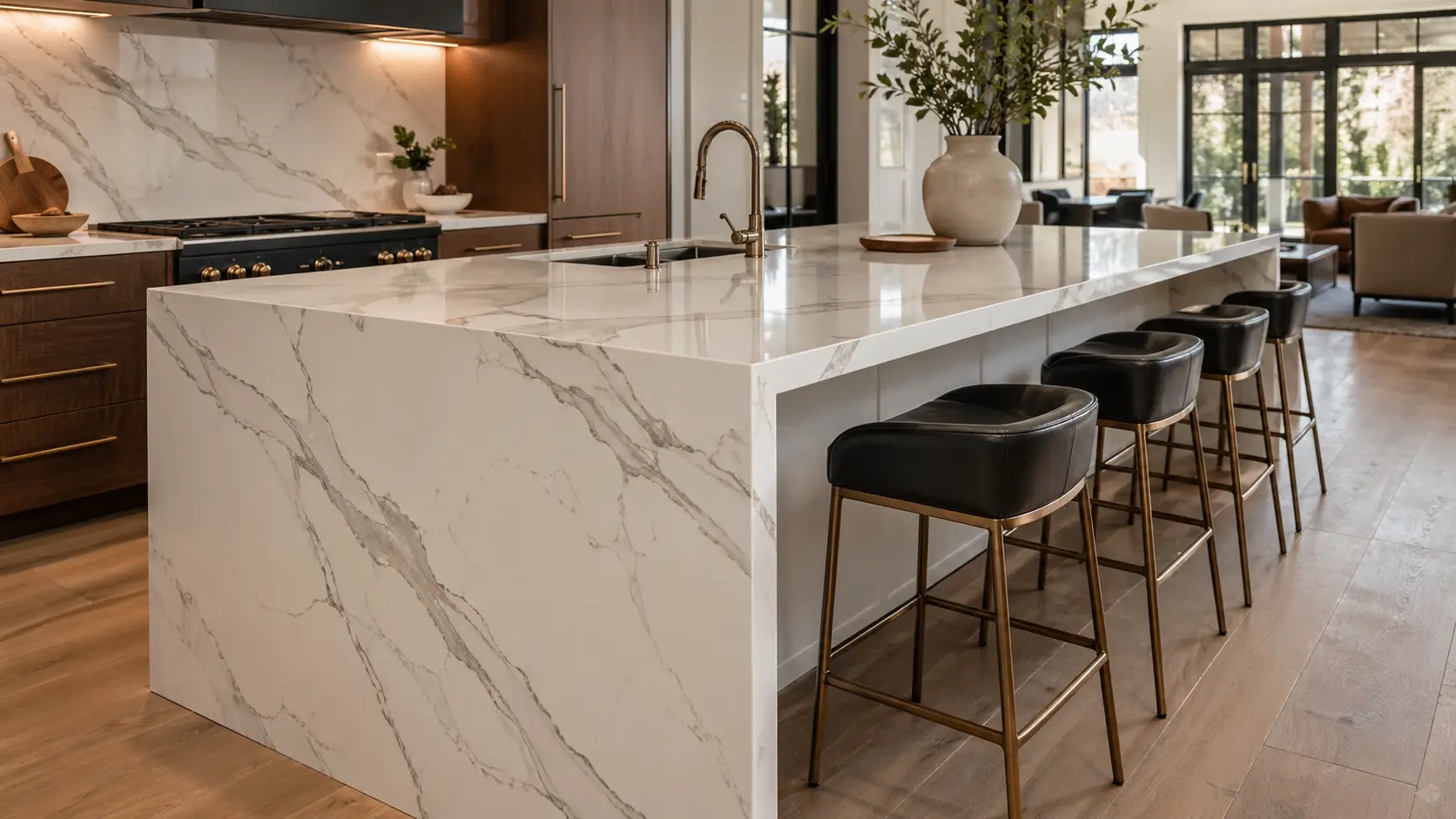
What Is 3D Print Full Body Quartz?
3D Print Full Body Quartz is an engineered quartz surface designed to create stronger visual continuity between the slab surface and the internal body. It uses advanced pattern design, digital printing, color control, and engineered stone production technology to achieve a more natural-looking marble effect, especially when the slab is cut, edged, or shaped.
To make it easy to understand, think of ordinary printed quartz as a material where the beauty is mainly on the surface. It may look attractive from above, but the edge may not always carry the same depth or pattern impression. By contrast, 3D printed quartz surfaces are developed to create a deeper, more layered visual effect. When applied to full body quartz design, the goal is to make the slab look more consistent from top to edge.
This does not mean every full body quartz slab is identical to natural marble. A responsible supplier should never oversell it that way. Natural marble is formed by geological processes over millions of years, and its veining is naturally unpredictable. 3D Print Full Body Quartz is different. It is a controlled engineered product created to deliver a marble-inspired appearance with better repeatability, lower maintenance, and stronger project consistency.
For buyers, that distinction matters. If a supplier claims that the material is “exactly the same as marble,” be careful. If the supplier explains where the material performs better, where it has limitations, how the edge sample looks, and how the batch is controlled, that is a much better sign.
The main advantage of 3D Print Full Body Quartz is not marketing language. It is practical fabrication confidence. When a fabricator cuts a sink opening, creates a mitered edge, or builds a waterfall island, the visual result should remain clean and premium. That is the difference buyers actually pay for.
How 3D Print Full Body Quartz Differs from Regular Quartz
Regular quartz is widely used because it is durable, consistent, and easier to maintain than many natural stones. It remains a strong choice for standard countertops, apartment projects, rental housing, and general residential use. However, regular quartz can have limitations when the design requires more exposed edge detail.
In many standard quartz slabs, the surface pattern is the visual focus. The internal body may be more uniform or less connected to the surface veining. This is not always a problem. If the project only uses simple straight edges and standard countertop layouts, the difference may not be obvious. But once the project includes thicker edges, waterfall sides, curved profiles, or undermount sink openings, the edge can become more visible.
That is where full body quartz countertops offer stronger design value. The buyer is not only choosing a color. The buyer is choosing how the material behaves visually after fabrication.
For example, imagine a kitchen island with a dramatic white marble-look quartz surface. From the top, the slab looks beautiful. But if the vertical waterfall edge suddenly appears flat, plain, or disconnected from the surface pattern, the final installation loses part of its luxury feel. In high-end projects, that small detail can make the difference between “acceptable” and “premium.”
3D Print Full Body Quartz is designed to reduce that visual break. The veining, color depth, and stone-like effect are planned with fabrication in mind. This makes it especially valuable for projects where edges are part of the design rather than hidden construction details.
A simple decision rule works well here: if the design is basic and cost-driven, regular quartz may be enough. If the design is premium, edge-exposed, or brand-sensitive, 3D Print Full Body Quartz is usually a smarter choice.
Why Buyers Are Paying More Attention to Full Body Quartz Slabs
The rise of full body quartz slabs is not accidental. It is connected to several real buyer pressures in the modern surface market.
First, natural marble remains highly desirable, but many buyers worry about maintenance. Marble can be beautiful, but it may require sealing, careful cleaning, and more protection from acidic substances. For homeowners, hotels, restaurants, and apartment developers, that maintenance burden can become a long-term problem. A material may look perfect on day one but become difficult to manage after repeated daily use.
Second, buyers want more predictable project results. Natural stone varies from slab to slab. Some variation is part of its charm, but large commercial projects often need consistency. When a hotel needs dozens of vanities or a developer needs multiple apartment kitchens to follow the same design language, unpredictable color variation can create layout challenges and approval delays.
Third, designers are using more dramatic fabrication details. Modern interiors often include waterfall islands, book-match inspired wall panels, floating vanity tops, thick mitered edges, and large-format slabs. These designs expose more of the material body. A surface-only pattern is more likely to be noticed as artificial when the edge becomes part of the visual composition.
Fourth, distributors and contractors want fewer complaints. A buyer may approve a sample, but if the installed project looks different from expectations, the supplier, fabricator, and contractor may all face pressure. Better material consistency helps reduce that risk.
This is why 3D printed quartz surfaces are becoming more attractive. They answer a practical market need: buyers want the beauty of natural stone, the convenience of engineered quartz, and the visual continuity required by modern fabrication.
How 3D Print Full Body Quartz Is Made
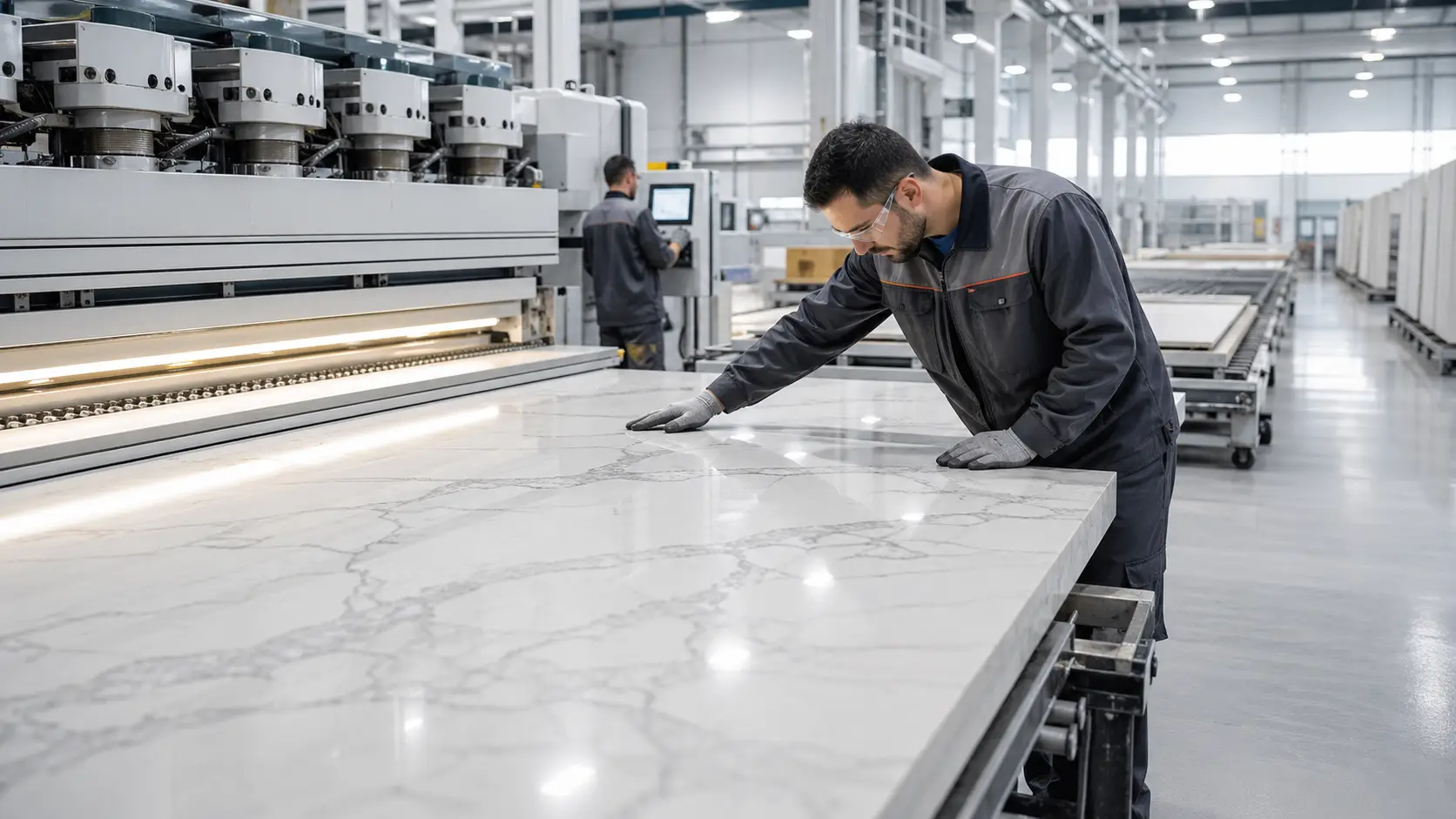
The exact production technology may vary between manufacturers, but the general process of 3D Print Full Body Quartz includes material preparation, color design, pattern application, slab forming, curing, calibration, polishing, and inspection.
A typical engineered quartz slab contains mineral aggregates, resin binders, pigments, and performance-related additives. The material blend is carefully controlled because color, hardness, density, surface quality, and slab stability all depend on production consistency. For premium quartz products, the quality of raw materials and mixing control directly affects the final visual and mechanical performance.
The 3D printing or pattern integration stage is where the product becomes more design-driven. Instead of relying only on a flat surface pattern, manufacturers use advanced color layering and pattern positioning to create stronger depth. The goal is to make the slab appear more natural and more continuous after cutting.
After the pattern and material are prepared, the slab is pressed under controlled conditions. Vacuum pressing helps reduce internal voids and improves density. The slab is then cured to stabilize the resin matrix. After curing, it goes through calibration to achieve the required thickness and surface flatness.
Polishing is another important step. A premium quartz slab factory should control gloss consistency across the slab. Uneven polishing can create visual problems, especially under strong lighting in showrooms, hotel lobbies, and kitchen spaces. For honed or matte finishes, surface uniformity is even more important because imperfections can be more visible.
Inspection should not only focus on the slab face. For 3D Print Full Body Quartz, edge checking is essential. A responsible manufacturer should evaluate cut samples, edge polish quality, pattern continuity, color consistency, and batch matching. If a supplier only shows top-surface photos but avoids edge samples, buyers should slow down. The edge is where the truth likes to hide — tiny detective hat and all.
Key Benefits of 3D Print Full Body Quartz
Better Visual Continuity After Fabrication
The most important benefit of 3D Print Full Body Quartz is improved visual continuity. Modern projects often expose the slab edge in ways that traditional countertop designs did not. Waterfall islands, thick-edge counters, integrated sinks, mitered aprons, and vertical panels all make the material body more visible.
If the edge does not visually match the surface, the project may look less refined. Full body quartz design helps reduce this problem by creating a more consistent appearance through the slab. This gives fabricators and project buyers more confidence when working with exposed details.
A Stronger Alternative to Marble-Look Surfaces
Many buyers want the elegance of Calacatta, Carrara, Arabescato, Taj Mahal, or other natural stone looks, but they do not always want the maintenance burden of natural marble. Marble-look full body quartz slabs offer a practical middle ground. They can provide a refined stone-inspired appearance while remaining easier to maintain in busy residential and commercial environments.
This is especially useful for kitchens, hotels, bathrooms, restaurants, and public-facing commercial spaces. These areas need materials that can look clean and premium while handling frequent use.
More Predictable Results for Project Buyers
Consistency matters in B2B purchasing. A homeowner may buy one slab. A hotel contractor may need dozens or hundreds of pieces. A distributor may need repeatable colors across multiple orders. A real estate developer may need the same visual style across different units.
3D Print Full Body Quartz supports this kind of project consistency better than many natural materials. While batch control still matters, engineered production gives manufacturers more ability to manage color tone, pattern direction, surface finish, and slab size.
Lower Maintenance Than Natural Marble
Natural marble can be sensitive to acidic substances, staining, and surface etching. It may require sealing and careful cleaning habits. Engineered quartz surfaces are generally easier to maintain in everyday use, which makes them attractive for busy kitchens, hospitality spaces, rental properties, and commercial interiors.
For buyers, lower maintenance is not just convenience. It can reduce complaints, after-sales service, replacement risk, and long-term ownership concerns.
More Design Freedom
Because 3D printed quartz surfaces can be developed in different patterns, tones, finishes, and slab formats, they offer strong design flexibility. Buyers can choose soft veining for minimalist interiors, bold veining for luxury spaces, warm beige tones for hospitality projects, or cool white surfaces for modern kitchens.
This makes the material useful across multiple design languages: modern, transitional, luxury classic, hotel-style, urban apartment, boutique retail, and commercial office interiors.
Where 3D Print Full Body Quartz Works Best

Kitchen Countertops
Kitchen countertops are one of the most common applications for 3D Print Full Body Quartz. The material works well because kitchens need both beauty and practicality. Buyers want a surface that looks elegant, resists daily wear, and does not require complicated maintenance.
For premium kitchens, the advantage becomes more obvious when the design includes an island, thick edge, or open-plan layout. In open kitchens, the countertop is visible from multiple angles. A better edge appearance helps the whole space feel more refined.
Waterfall Islands
Waterfall islands may be the strongest application for full body quartz slabs. In this design, the countertop material continues vertically down the side of the island. This means the edge and side surface are no longer minor details. They become the visual focus.
If regular quartz has weak edge continuity, the waterfall effect can look less natural. 3D Print Full Body Quartz helps create a more convincing stone-like transition from horizontal to vertical surfaces.
Bathroom Vanity Tops
Bathrooms often use smaller surfaces, but the details matter. Vanity tops may include undermount sinks, backsplashes, side returns, and exposed edges. A full body quartz appearance can help the finished vanity look more premium.
The material is also useful in hotel bathrooms, apartment bathrooms, and commercial washrooms where designers want a luxurious stone look with easier maintenance.
Commercial Reception Desks
Reception desks are brand surfaces. They are often the first physical detail visitors see when entering a hotel, office, clinic, showroom, or luxury retail space. A cheap-looking edge or artificial surface can weaken the overall impression.
3D printed quartz surfaces can help create elegant reception counters with better visual depth, especially when combined with lighting, metal trim, wood veneer, or architectural panels.
Wall Panels and Feature Walls
Large wall panels are becoming more common in modern interiors. They are used behind reception areas, in elevator lobbies, in bathrooms, and in luxury residential spaces. For wall applications, pattern continuity and slab size matter.
3D Print Full Body Quartz can support a strong marble-look effect while offering easier care than many natural stones. For projects that require repeatable panel design, engineered quartz can be easier to manage than highly variable natural stone.
Hospitality and Real Estate Projects
Hotels, serviced apartments, luxury condominiums, and commercial developments often need a balance between appearance, durability, and supply stability. These projects usually involve multiple rooms, repeated layouts, and strict approval processes.
For this reason, a reliable quartz surface manufacturer can be valuable. The buyer needs more than a good-looking slab. They need stable production, clear communication, quality control, packing protection, batch management, and delivery reliability.
3D Print Full Body Quartz vs Regular Quartz: Which One Should Buyers Choose?
Regular quartz is still a practical and reliable surface material for many standard projects. It offers stable appearance, easy maintenance, and good durability for everyday countertops, apartment kitchens, laundry rooms, and budget-sensitive commercial interiors. For simple flat surfaces with limited exposed edges, regular quartz may already meet the buyer’s needs.
The difference becomes more important when the project requires visible fabrication details. If the design includes waterfall islands, thick mitered edges, undermount sink cut-outs, curved profiles, or large commercial counters, the edge and side surfaces become part of the visual design. In these cases, 3D Print Full Body Quartz usually provides stronger value because it is designed to improve surface-to-edge visual continuity after cutting, polishing, and installation.
The smartest way to compare the two materials is not to ask which one is “better” in general. The better question is: which material fits the project’s design complexity, fabrication method, maintenance expectation, and visual standard? A standard kitchen may not need full body quartz, but a luxury kitchen island, hotel vanity, or reception counter may benefit from the deeper pattern impression and more consistent finished appearance.
| Project Situation | Recommended Choice | Why It Makes Sense |
|---|---|---|
| Standard apartment countertop or simple flat kitchen surface | Regular quartz | It provides good durability, easy maintenance, and cost-efficient performance when edge exposure is limited. |
| Luxury kitchen island with waterfall edges | 3D Print Full Body Quartz | The material helps maintain better visual continuity from the top surface to the vertical side panels. |
| Bathroom vanity with undermount sink cut-outs | 3D Print Full Body Quartz | Exposed sink edges and polished profiles look more refined when the slab body supports the surface pattern. |
| Rental housing, utility areas, or budget-controlled projects | Regular quartz | The project may not need premium edge continuity if the design is simple and highly cost-driven. |
| Hotel lobby, retail counter, or commercial reception desk | 3D Print Full Body Quartz | High-visibility commercial surfaces need stronger visual depth, better detail control, and a more premium finished impression. |
| Projects requiring repeatable colors across multiple units | 3D Print Full Body Quartz or regular quartz, depending on design level | Both can support batch consistency, but full body quartz is stronger when premium fabrication details are also required. |
In practical terms, regular quartz is the safer choice for simple, functional surfaces, while 3D Print Full Body Quartz is the better option when the final installation must look premium from every visible angle. Buyers should make the decision based on the finished design, not only the slab photo. If the project exposes edges, profiles, side panels, or cut-outs, full body quartz gives more confidence. If the surface is simple, flat, and budget-driven, regular quartz may be enough.
3D Print Full Body Quartz vs Natural Marble
Natural marble has a beauty that engineered materials cannot fully duplicate. Its veining, mineral movement, and natural variation are unique. For some luxury projects, that uniqueness is the entire point.
However, natural marble also brings practical concerns. It can be more sensitive to staining, etching, and maintenance mistakes. It may require sealing. It may vary significantly between slabs. For some buyers, especially commercial buyers, those risks are difficult to manage.
3D Print Full Body Quartz offers a different value proposition. It is not trying to replace marble in every situation. Instead, it gives buyers a more predictable and lower-maintenance option when they want a marble-like appearance without the operational concerns of natural marble.
For a private villa where the owner loves natural character, marble may still be the preferred choice. For a hotel group that needs repeatable vanity tops across 200 rooms, 3D Print Full Body Quartz may be the more practical decision. For a kitchen showroom that wants dramatic waterfall islands with fewer maintenance objections from customers, full body quartz can be a strong selling point.
For buyers specifically comparing rare Calacatta marble with modern printed quartz surfaces, this related guide explains why 3D printed quartz can be a practical Calacatta marble alternative for kitchens, hotels, commercial interiors, and wholesale surface collections.
The smarter comparison is not “which material is better?” The real question is “which material fits the project risk, usage environment, maintenance expectation, and visual requirement?”
Buyer Pain Points Before Ordering 3D Print Full Body Quartz
The Slab Looks Beautiful, But the Edge Tells a Different Story
One of the most common buyer mistakes is approving a slab based only on top-surface photos. This is risky because 3D Print Full Body Quartz must be judged not only by the face but also by the edge, cut sample, and fabricated details.
A surface photo may hide the real difference between premium full body quartz and ordinary printed quartz. Before ordering, buyers should request edge samples, close-up cut photos, and preferably real fabrication examples.
Sample Approval Does Not Always Guarantee Batch Consistency
Another common issue is the difference between small samples and bulk slabs. A small sample may show only one attractive section of the pattern. Full-size slabs may reveal repeated veining, uneven color balance, or less natural movement.
Buyers should ask for full slab photos, batch photos, and production confirmation before placing bulk orders. For large projects, it is better to approve the actual batch instead of relying only on a showroom sample.
Pattern Repetition Can Make the Surface Look Artificial
Poorly designed 3D printed quartz may show obvious repeated patterns. This is a major problem for large surfaces, wall panels, and islands because repeated veins can look unnatural.
Premium 3D printed quartz surfaces should have balanced movement, controlled variation, and believable spacing. The best designs do not scream for attention. They support the space quietly and confidently.
Some Suppliers Use “Full Body” Too Loosely
The term “full body” can be used differently by different suppliers. Some may use it to describe a slab with better color depth. Others may mean stronger pattern continuity. Some may use the term mainly for marketing.
This is why buyers should not rely only on product names. Ask for evidence. Request cut samples. Ask how the material performs on mitered edges. Ask whether the supplier has project photos showing finished countertops, vanities, or waterfall islands.
A reliable 3D Print Full Body Quartz manufacturer should be willing to show more than a polished slab face.
Compliance and Market Risk Are Often Ignored
The surface industry is entering a stricter compliance environment. Buyers can no longer assume that all engineered quartz products are suitable for every market. Some regions are tightening rules around engineered stone, silica exposure, and import control.
For distributors, contractors, and international buyers, this is not a small detail. Ordering the wrong material for the wrong market can create customs problems, installation delays, legal exposure, and reputational damage.
Before placing an order, buyers should confirm the target market’s current requirements and ask suppliers for accurate material information. A good supplier should not treat compliance as “buyer’s problem only.” In modern B2B trade, material transparency is part of product quality.
Compliance and Industry Direction: Why Safer Surface Materials Matter
The future of 3D Print Full Body Quartz will not be shaped by design trends alone. It will also be shaped by safety regulations, fabrication practices, import controls, and buyer expectations around material transparency.
This matters because engineered quartz surfaces may contain crystalline silica. During normal daily use, the installed surface is not the main concern. The higher-risk stage is fabrication, especially cutting, grinding, drilling, polishing, and dry processing. These activities can generate respirable crystalline silica dust if proper controls are not used.
For buyers, this does not mean quartz surfaces should be ignored. It means they should be sourced, fabricated, and installed responsibly. A professional buyer should no longer look only at color, thickness, and slab price. The modern purchasing checklist should also include fabrication guidance, wet cutting recommendations, dust control awareness, market restrictions, and documentation from the supplier.
The regulatory direction is already clear in several markets. Australia has taken one of the strictest positions by banning engineered stone benchtops, panels, and slabs in domestic use and later restricting imports of such products. Other markets continue to enforce silica exposure standards in fabrication workplaces. This does not mean every market will follow the exact same path, but it does show that surface material buyers must take compliance more seriously than before.
For a distributor, importer, contractor, or project buyer, this creates a new layer of decision-making. A beautiful slab is not enough if the material creates regulatory problems in the destination market. A low-cost offer is not attractive if it leads to customs delays, project rejection, safety disputes, or reputational damage.
This is where a reliable quartz surface manufacturer becomes more valuable. The right supplier should understand that international buyers need more than product photos. They need accurate product information, responsible communication, and realistic guidance about fabrication and application. If a supplier cannot explain material composition, production process, market limitations, or safe fabrication recommendations, that supplier may not be suitable for serious B2B buyers.
What Compliance Means for Global Buyers
Compliance is not only a legal issue. It is a project risk issue. It affects purchasing, logistics, installation, insurance, worker safety, and long-term business reputation.
For buyers sourcing full body quartz slabs, the first step is to confirm whether the product is allowed in the destination market. This is especially important for importers, wholesalers, countertop distributors, and contractors selling across different regions. One product may be acceptable in one country but restricted in another.
The second step is to understand how the product will be fabricated. A slab may leave the factory in good condition, but improper cutting or dry polishing can create serious safety concerns. Buyers should work with fabricators that use wet cutting, dust extraction, respiratory protection, and workplace safety procedures where required.
The third step is to ask suppliers for clear documentation. This may include product specifications, material information, safety guidance, packing details, batch records, and care instructions. A serious 3D Print Full Body Quartz manufacturer should be able to provide practical documents instead of vague promises.
The fourth step is to consider alternative materials when regulations require it. In certain markets, buyers may need to compare 3D Print Full Body Quartz with sintered stone, porcelain slabs, natural stone, low-silica surfaces, or other compliant materials. This does not weaken the value of quartz. It simply means smart buyers choose materials based on market conditions, not just appearance.
In practical terms, buyers should treat compliance as part of product selection. The question is not only, “Does this slab look good?” The better question is, “Can this slab be safely imported, fabricated, installed, maintained, and sold in my target market?”
Common Mistakes Buyers Should Avoid
Choosing Only by Surface Photos
This is the most common mistake. Surface photos can be beautiful, but they do not show the full story. A slab may look premium from above while the edge, cut-out, or mitered corner reveals weak visual continuity.
For 3D Print Full Body Quartz, buyers should always ask for edge samples, close-up photos, and real fabricated project images. If the supplier only provides polished top-surface photos, the buyer is not seeing enough information.
This mistake can lead to disappointment after fabrication. The countertop may look fine in a catalog but less convincing once installed. In premium residential and commercial projects, this kind of mismatch can damage the perceived quality of the whole space.
Ignoring Edge Performance
Edge performance is one of the main reasons buyers choose full body quartz slabs. If the project includes waterfall islands, thick mitered edges, curved corners, or undermount sinks, the edge is not a hidden detail. It is part of the design.
A buyer who ignores edge performance may choose a material that looks attractive as a flat slab but fails visually after cutting. This can increase waste, cause rework, delay installation, or create conflict between the buyer, fabricator, and end customer.
Before ordering, buyers should ask for edge polishing samples, mitered edge examples, and sink cut-out photos. This is especially important for luxury kitchens, hotel vanities, commercial reception counters, and showroom display pieces.
Treating All Quartz Suppliers as the Same
Not every quartz slab factory has the same production capability. Some suppliers are strong in standard quartz but weak in advanced 3D printed effects. Some can produce attractive samples but struggle with batch consistency. Some can make slabs but do not understand export packaging, project documentation, or after-sales communication.
For B2B buyers, supplier selection is not just about who offers the lowest price. It is about who reduces risk. A better supplier helps control color consistency, production timing, packing quality, slab selection, container loading, and communication during the order process.
A poor supplier may save money at the beginning but create much higher costs later through breakage, delays, mismatched batches, poor documentation, or weak technical support. The cheapest slab can become the most expensive mistake if the project goes wrong.
Not Checking Batch Consistency
Small samples can be misleading. A small piece may show an attractive vein or a perfect color tone, but the full slab may look different. Even within the same product name, batch variation can happen.
For bulk orders, buyers should request full slab photos from the actual production batch. For large commercial projects, batch approval should be part of the purchasing process. This helps reduce the risk of color mismatch between different rooms, units, counters, or wall sections.
Batch consistency is especially important for wholesale quartz slabs, hotel projects, apartment developments, kitchen cabinet distributors, and countertop fabricators who need repeatable results.
Forgetting About Fabrication Requirements
A slab is not the final product. The final product is the installed countertop, vanity, wall panel, island, or commercial counter. This means the fabrication method matters.
Buyers should tell the supplier how the material will be used. Will it be cut into countertops? Will it require undermount sink openings? Will it be used for waterfall islands? Will it need book-match inspired layouts? Will it be polished on exposed edges? Will it be used in a hotel, kitchen, bathroom, or retail environment?
Without this information, the supplier may recommend the wrong product or fail to prepare the right samples. Good purchasing starts with clear application details.
Ignoring Local Market Rules
This mistake is becoming more serious. Some buyers still assume that engineered quartz can be sold everywhere in the same way. That is no longer a safe assumption.
Before importing or promoting 3D Print Full Body Quartz, buyers should check destination-market rules. In some regions, engineered stone restrictions, silica exposure rules, labeling requirements, or fabrication regulations may affect how the material can be used.
Ignoring this step can lead to import problems, project delays, and legal exposure. For international B2B buyers, compliance review should happen before the order, not after the container arrives.
How to Choose a Reliable 3D Print Full Body Quartz Manufacturer
Check Real Production Capability
A reliable 3D Print Full Body Quartz manufacturer should be able to explain its production process clearly. Buyers should ask about slab sizes, thickness options, surface finishes, color systems, pattern development, polishing control, and inspection procedures.
The supplier should also be able to provide real images of production, not only edited showroom photos. Factory capability matters because full body quartz requires more than simple surface decoration. It requires control over pattern depth, color blending, slab forming, surface finishing, and quality inspection.
A strong manufacturer should understand both design and fabrication. If a supplier can only talk about appearance but cannot discuss cutting, edge polishing, batch control, or packing, buyers should be cautious.
Ask for Edge Samples and Cut Samples
This is one of the most practical steps. Edge samples reveal what product photos cannot. They show how the material looks after cutting and polishing. They also help buyers judge whether the slab can support high-end fabrication details.
For projects involving waterfall islands, mitered edges, undermount sinks, or thick profiles, cut samples are not optional. They are part of responsible sourcing.
A professional supplier should be comfortable providing these samples. If the supplier avoids this request, the buyer should ask why.
Review Full Slab Photos Before Bulk Ordering
Full slab photos help buyers evaluate pattern balance, vein distribution, color tone, and repeatability. This is especially important for marble-look full body quartz slabs, where the naturalness of the pattern affects the premium feel.
Buyers should avoid approving an order based only on small samples. Small samples are useful for color reference, but they do not show the full design movement. For large-format surfaces, the full slab is the real design unit.
Confirm Quality Control Standards
Quality control should include more than surface inspection. Buyers should ask about thickness tolerance, flatness, gloss consistency, edge quality, color variation, resin stability, surface defects, and packing standards.
For export orders, packaging quality is especially important. Quartz slabs are heavy and can be damaged during loading, shipping, unloading, and warehouse handling. A reliable factory should use proper A-frame packing, slab protection, container loading methods, and shipping documentation.
Poor packaging can destroy the value of a good product. Nobody wants a premium slab arriving like it fought a forklift and lost.
Evaluate Export Experience
A supplier may produce good slabs but still struggle with export orders. International buyers need suppliers who understand communication timing, document preparation, shipping coordination, container loading, customs requirements, and after-sales response.
A reliable quartz countertops supplier should be able to support distributors, fabricators, project contractors, and wholesalers with practical order information. This includes MOQ, lead time, packing method, sample process, replacement policy, and production schedule.
Export experience is not a decoration. It is a risk-control factor.
Ask the Right Questions Before Ordering
| Buyer Question | Why It Matters |
|---|---|
| Can you provide edge samples? | Confirms real visual continuity after cutting |
| Can you show full slab photos? | Helps evaluate pattern balance and naturalness |
| Can you provide actual batch photos? | Reduces the risk of color mismatch |
| What thickness options are available? | Affects application, fabrication, and structure |
| What finishes can you produce? | Helps match design and maintenance needs |
| Do you support OEM patterns? | Useful for distributors and branded collections |
| How do you pack export slabs? | Reduces breakage risk during shipping |
| What markets have you exported to? | Shows export experience and compliance awareness |
| Can you provide material information? | Supports buyer documentation and market review |
| What is your lead time for bulk orders? | Helps project planning and delivery control |
Recommended Product Specification Framework
A clear specification table helps buyers compare suppliers more efficiently. It also makes the article more useful for AI search engines because the information is structured and easy to extract.
| Specification Item | Recommended Buyer Check |
|---|---|
| Product Name | 3D Print Full Body Quartz |
| Product Type | Engineered quartz surface |
| Main Visual Style | Marble-look, natural stone-inspired, deep veining |
| Common Applications | Kitchen countertops, bathroom vanities, waterfall islands, wall panels, reception desks |
| Common Thickness Options | 15mm, 18mm, 20mm, 30mm, depending on supplier capability |
| Surface Finish Options | Polished, honed, matte, customized finish |
| Key Buying Point | Edge continuity, pattern depth, batch consistency |
| Fabrication Focus | Mitered edges, sink cut-outs, side profiles, waterfall edges |
| Project Suitability | Residential, hospitality, commercial, apartment, retail, office interiors |
| Supplier Requirement | Edge samples, full slab photos, QC process, export packing, documentation support |
Future Trends in 3D Print Full Body Quartz
More Realistic Marble-Look Patterns
The next generation of 3D printed quartz surfaces will focus on more natural pattern movement. Buyers will expect less repetition, softer transitions, better vein depth, and more convincing stone-like details.
Designers are becoming more sensitive to artificial-looking patterns. A dramatic vein may attract attention in a photo, but if it repeats too obviously across slabs, it can weaken the premium effect. Future products will need to balance visual drama with natural randomness.
Lower-Silica and Safer Surface Innovation
Regulation will push material innovation. Manufacturers may develop lower-silica quartz alternatives, safer engineered surfaces, improved dust-control guidance, and more transparent documentation.
For buyers, this means future sourcing will become more technical. Product selection will not only ask “What does it look like?” but also “How is it made, how is it fabricated, and where can it be used?”
Larger Slabs for Seamless Interiors
Large-format slabs are becoming more popular in modern design. They reduce seams, create cleaner visual lines, and support more luxurious wall and island applications.
For full body quartz slabs, larger sizes can increase design value, but they also require better packing, handling, fabrication equipment, and installation planning. Buyers should not only ask whether large slabs are available. They should ask whether the supplier and fabricator can handle them properly.
Custom Pattern Development for Brands
Distributors and project buyers may increasingly request custom patterns. A quartz surface manufacturer that can support OEM design, private-label collections, and project-specific colors will have an advantage.
This is especially useful for wholesalers, kitchen brands, hotel groups, and real estate developers that want exclusive surface designs instead of common catalog patterns.
More Transparent Buyer Education
The surface industry is moving toward clearer communication. Buyers will expect better product data, care instructions, fabrication guidance, safety information, and comparison content.
Manufacturers that only provide attractive photos may lose trust. Manufacturers that educate buyers, explain limitations, and support decision-making will gain stronger long-term business relationships.
Final Recommendation: Is 3D Print Full Body Quartz Worth Choosing?
3D Print Full Body Quartz is worth choosing when the project requires more than a good-looking top surface. It is especially valuable when the design includes exposed edges, waterfall islands, mitered profiles, undermount sinks, commercial counters, large wall panels, or premium marble-look interiors.
For simple projects, standard quartz may be enough. For natural luxury projects, marble may still be the right choice. But for buyers who want stone-inspired beauty, lower maintenance, better batch control, and stronger fabrication confidence, 3D Print Full Body Quartz offers a practical and commercially attractive solution.
The smartest buyers should not choose this material only because it sounds advanced. They should choose it because the project needs its advantages. Before placing an order, request edge samples, full slab photos, actual batch confirmation, fabrication guidance, packing details, and market-specific compliance information.
For distributors, contractors, designers, and project buyers, the best result comes from working with a supplier who understands both surface design and real-world installation. A professional 3D Print Full Body Quartz manufacturer should help buyers reduce risk, improve project consistency, and make the final surface look as strong in reality as it did in the design plan.
For buyers planning modern countertops, vanities, commercial interiors, or wholesale quartz collections, this is the moment to evaluate whether full body quartz slabs can help upgrade both appearance and project reliability.
Frequently Asked Questions
1. What is 3D Print Full Body Quartz?
3D Print Full Body Quartz is an engineered quartz surface designed to create stronger visual continuity between the slab surface and the internal body. Unlike ordinary printed quartz, which may rely mainly on surface decoration, 3D Print Full Body Quartz uses advanced pattern design, color layering, and production control to create a deeper stone-like appearance. It is commonly used for kitchen countertops, bathroom vanity tops, waterfall islands, wall panels, and commercial reception counters where edge appearance and premium visual consistency matter.
2. Is 3D Print Full Body Quartz better than regular quartz?
3D Print Full Body Quartz is not automatically better for every project, but it is usually better for projects where exposed edges, mitered profiles, sink cut-outs, and waterfall details are important. Regular quartz can work well for simple countertops and budget-sensitive projects. However, if the design requires a more realistic marble-look surface and better visual continuity after fabrication, 3D Print Full Body Quartz is often the stronger choice.
3. Can 3D Print Full Body Quartz replace natural marble?
3D Print Full Body Quartz can replace natural marble in many practical applications, especially when buyers want a marble-like appearance with lower maintenance and more consistent supply. It is suitable for kitchens, bathrooms, hotels, apartments, and commercial spaces where stain resistance, batch consistency, and easy care are important. However, natural marble still has unique geological veining and natural character, so it remains a strong choice for projects where authentic natural stone variation is the main design goal.
4. Is 3D Print Full Body Quartz safe to use?
Installed 3D Print Full Body Quartz surfaces are generally stable for normal residential and commercial use. The main safety concern is not everyday use but fabrication, including cutting, grinding, drilling, and polishing, which may generate respirable crystalline silica dust if proper controls are not used. Buyers should work with responsible suppliers and fabricators that follow wet cutting, dust extraction, personal protection, and local workplace safety requirements.
5. What should buyers check before ordering full body quartz slabs?
Before ordering full body quartz slabs, buyers should check edge samples, full slab photos, actual batch images, thickness options, surface finish, pattern consistency, packing method, lead time, and supplier export experience. For projects with waterfall islands, undermount sinks, or thick mitered edges, buyers should also request fabricated edge examples. These checks help reduce the risk of color mismatch, weak edge appearance, fabrication problems, and project delays.
6. Where is 3D Print Full Body Quartz most commonly used?
3D Print Full Body Quartz is commonly used for kitchen countertops, bathroom vanity tops, waterfall islands, wall panels, hotel interiors, apartment projects, retail counters, and commercial reception desks. It is especially useful in applications where the surface is highly visible from multiple angles and where the buyer wants a marble-look design with better consistency and easier maintenance than natural marble.
7. How do I choose a reliable 3D Print Full Body Quartz manufacturer?
To choose a reliable 3D Print Full Body Quartz manufacturer, buyers should evaluate production capability, edge sample quality, full slab photo transparency, batch consistency, quality control standards, export packing, documentation support, and communication speed. A strong manufacturer should be able to explain the production process, provide real project examples, support custom patterns when needed, and help buyers understand suitable applications and market-specific compliance considerations.
References
- Safe Work Australia, “Engineered Stone Ban,” Safe Work Australia.
- Australian Government Department of Employment and Workplace Relations, “Prohibition on the Use of Engineered Stone,” Department of Employment and Workplace Relations.
- Australian Border Force, “Prohibited Goods: Engineered Stone,” Australian Border Force.
- Occupational Safety and Health Administration, “Respirable Crystalline Silica,” OSHA.
- National Institute for Occupational Safety and Health, “Silica, Crystalline,” NIOSH.
- Centers for Disease Control and Prevention, “Work-Related Silicosis,” CDC.
- Canadian Centre for Occupational Health and Safety, “Silica, Quartz,” CCOHS.
- Natural Stone Institute, “Natural Stone and Engineered Quartz Surface Guidance,” Natural Stone Institute.
Why 3D Print Full Body Quartz Is Becoming a Smarter Choice for Modern Projects
What it is: 3D Print Full Body Quartz is an engineered quartz surface developed to improve the visual connection between the slab face and the internal body. Its main value is not only the marble-look pattern on the top surface, but the way the material performs after cutting, polishing, edging, and installation. For projects involving waterfall islands, bathroom vanities, commercial counters, and wall panels, this stronger visual continuity can make the finished surface look more refined and less artificial.
Why it matters: Many buyers choose quartz because they want the beauty of natural marble with easier maintenance and more predictable project supply. However, ordinary printed quartz may show visual weakness at exposed edges, sink cut-outs, and mitered corners. 3D Print Full Body Quartz helps reduce this risk by offering better edge consistency, deeper pattern impression, and a more complete stone-like appearance across visible fabrication details.
How buyers should evaluate it: A buyer should not judge full body quartz slabs only by polished surface photos. The more important checks include edge samples, cut samples, full slab images, batch photos, surface finish consistency, thickness options, and real fabricated project cases. If the project includes exposed edges, thick profiles, or waterfall designs, these checks become essential because they reveal whether the material can still look premium after fabrication.
Option insight: Regular quartz is suitable for standard countertops, rental apartments, and budget-sensitive projects where edge exposure is limited. Natural marble is still valuable for projects that require authentic geological variation and one-of-a-kind stone character. 3D Print Full Body Quartz is the stronger middle option when buyers need marble-like aesthetics, lower maintenance, better batch control, and more reliable visual continuity for modern interiors.
Application insight: This material is especially suitable for kitchen countertops, waterfall islands, bathroom vanity tops, hotel interiors, commercial reception desks, feature walls, and apartment projects. In these applications, the surface is often viewed from multiple angles, which means edge quality and pattern depth directly affect the final design impression. For distributors, fabricators, and project contractors, full body quartz can also help reduce complaints caused by edge mismatch or inconsistent slab appearance.
Compliance consideration: The engineered stone industry is moving toward stricter safety and compliance expectations, especially around fabrication dust, silica exposure, import restrictions, and workplace protection. Buyers should confirm whether the selected quartz surface is suitable for the destination market and should work with fabricators that follow proper cutting, dust control, and safety procedures. Material beauty is important, but modern surface procurement also requires documentation, transparency, and responsible fabrication guidance.
Buying recommendation: Choose 3D Print Full Body Quartz when the project requires a premium marble-look surface with better edge performance, stronger design consistency, and easier long-term maintenance than natural marble. Before placing a bulk order, request edge samples, actual batch photos, fabrication examples, packing details, lead time confirmation, and market-specific compliance support from a reliable quartz surface manufacturer or quartz slab factory.


